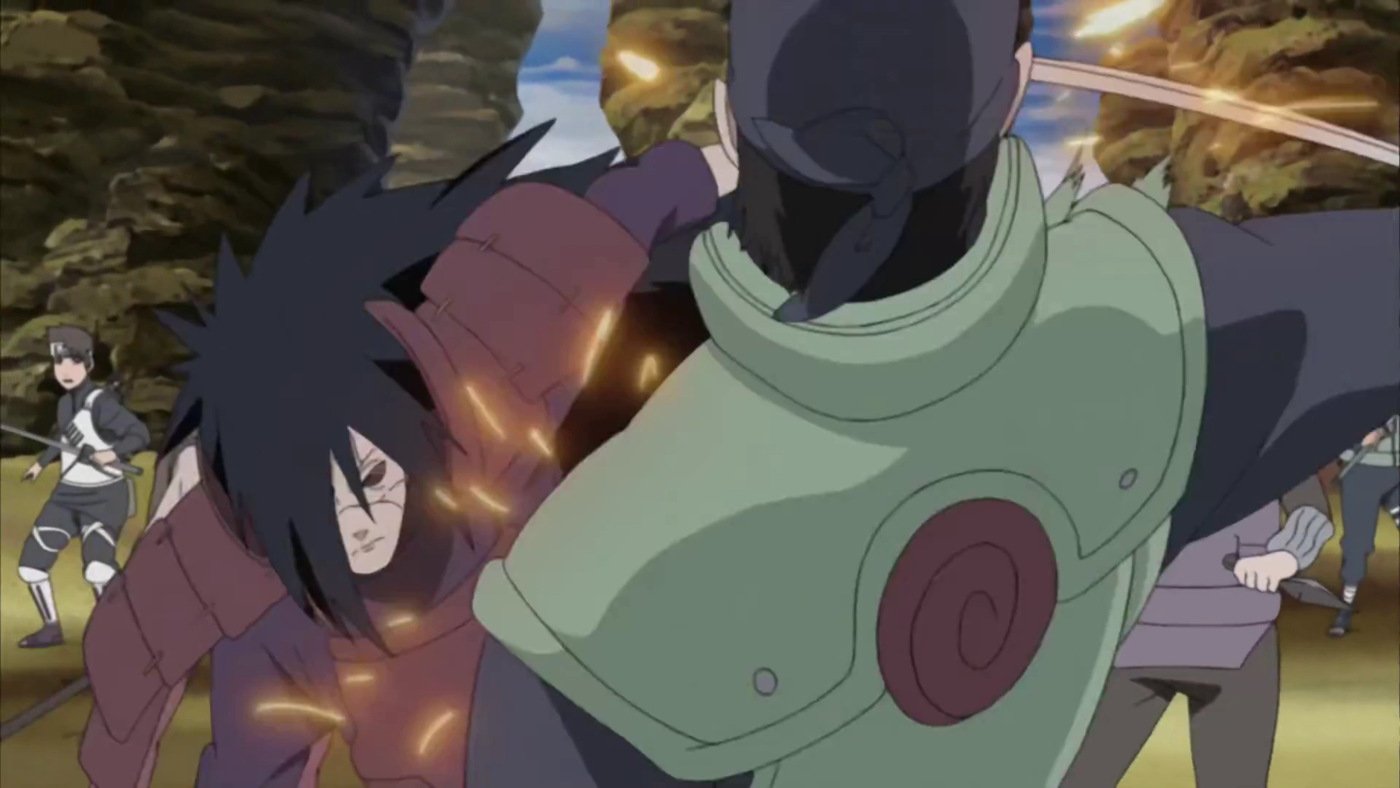
Lists of roleplay scenarios are usually a parade of fights: the duel, the invasion, the rooftop, the final stand, ten variations on the same afternoon. That approach fails badly with Madara, because he is the character least improved by a fight. He can end any fight he walks into, so a list built on combat gives you ten scenes that all end in the same two minutes.
What is left, once you take the brawls out, is much more interesting. He is a philosopher who happens to be a general, a teacher who happens to be a tyrant, and a man whose entire plan had a successful completion state that everybody else calls a catastrophe. Those three things generate far better material than another duel, which is why the ten below lean on argument, awkward domesticity, children, and one genuinely disturbing offer.
Each one has a premise, a reason it works, and the beat you are trying to hit. The Madara Uchiha AI on this site will take any of them cold, so if you want to try a scenario before you write it yourself, start there and use these as prompts rather than scripts.
How to pick one, and how to play it
One rule runs through all ten: he should not be trying his hardest. Madara at full effort is a cutscene. Madara at conversational effort is a character, and the entire pleasure of writing him is the gap between how little he is spending and how thoroughly the room is ruined. Keep him in the amused or interested register for most of a scene, let him be genuinely courteous, and let the horror leak out sideways in details he does not think are important. A scene where he mentions a village of two hundred people in the same tone as the weather has already succeeded.
The second rule is about the other character. Before you type a word, decide what your person wants from him. Recruit him, defeat him, understand him, survive him, or replace him — those are five completely different scenes out of the same opening line. Most of these scenarios specify which, because the whole thing falls apart if your character is just standing there being impressed.
One more note before the list. Madara shares a franchise with a lot of very loud characters, and the instinct is to give him volume. Resist it. He is closer to a professor who has decided the future of the species, which means he is interested rather than furious, and he will spend an entire scene explaining his reasoning to you with perfect clarity while the thing he is describing is unspeakable. That gap is the character, and it is also the thing readers remember a week later. The guide to roleplaying Sukuna is a useful contrast piece for exactly this reason: same franchise, entirely opposite temperament, and comparing the two teaches you which of your lines are doing character work.
Three that start with steel
1. The valley has statues of two men who are not you
The Valley of the End is carved with two enormous figures of two men who were the most powerful pair in history, and you have been sent there to die in the gap between them. He is waiting for you, sitting in the air, and he makes no move for a long moment before speaking.
Play the geography. The river, the statues, the specific height he keeps between you — all of it is characterisation, and the reader should be able to tell you are writing Madara without reading his dialogue. Have him compliment your footing rather than your technique. The trick that makes this scene work is that he does not want to win quickly; he wants to see how you move, and he says so, cheerfully, like a man watching a bird.
2. Thirty seconds before the village is not a building anymore
Something is being destroyed at the far end of the valley and you have one exchange with the most powerful man alive before it is over. No arc, no speeches, just two people who are each extremely good at this, in a conversation that has a countdown running under it.
Give your character a reason to leave mid-fight, and make Madara let them. He could stop anyone. Instead he solves the problem in a way that ends the fight and the village at once, then goes back to talking as if the interruption was a mild scheduling issue. The best version of this ends with him offering to walk with you to the ruins, which is a worse sentence than any threat. The temptation here is to stretch the fight; resist it, because a short fight with a long aftermath is more frightening than a long one. The aftermath is where he says something about a building that used to be somebody’s home, in the tone of a man checking the weather.
3. The layout of a village you helped build
You are on the wall of a village being taken apart by someone who grew up in it, and you know the exact position of the well, the grain store, and the house with the leaking roof. He moves through his own settlement with the familiarity of someone who has visited it several times across a century, without any particular feeling about it.
Let him call two houses by name. That is the whole scene, and it is much more frightening than a speech about ideology, because it tells the reader that he remembers everything and has accepted all of it. He will not enjoy the demolition and he will not resist it. Put your character’s anger against his calm and let the calm win on tempo rather than on force.
Three that start with a question
4. What do you actually want?
He has no reason to interrogate you and every intention of doing it anyway. The scene is one long conversation in which he asks you about your village, your losses, your definition of peace, and takes notes, visibly, which is unnerving in a way that a fist is not.
The turn is that he is not fishing for information. He is grading you, and he is honest about the criteria, which are not the ones you were expecting. Do not let your character perform conviction; let them say the small stupid true thing about their own failures, because that is the answer he is actually listening for. A quiet scene, but a hard one to fake, and it is the best place to test whether your Madara has any texture behind the plan.
5. The signature at the bottom of a peace treaty
There is a room full of civilian delegates, scribes, and frightened trade representatives, and Madara is there to agree to a ceasefire. He is extremely competent and completely unable to understand why the procedure is necessary. Somebody asks for a recess and he treats the concept with the baffled respect of a man who has never once had to wait for anyone.
This is the comedy scenario, and it works because the absurdity is real. He is not funny on purpose, which is what makes it funny. Give him one line of deadpan about forms and one moment of accidental terrifying authority, and let the delegates react to the gap. Nobody in the room except you realises that the man complaining about clause formatting has already decided how the next hundred years go.
6. You woke up in a room with him in it
Somehow you have Madara Uchiha in a cell, or a cage, or your own headquarters, and he is delighted. This is the scenario people avoid because it should be impossible, and the version that works is the one where you never explain how you did it and he never asks.
He treats captivity as a social arrangement. He sits down, he asks about the room, he compliments your fortification and gently explains that he is not there because he is trapped but because he finished reading your defences on the way in. Turn it around before the end: have him spend the whole conversation recruiting you, so that the last line of the scene is a genuine offer and you have to decide whether you were ever the one holding him.
Three that start with someone small
7. The boy from the graves
A child from a destroyed village has followed him across a battlefield and asked to be taught. He is charmed. He is also, as he is with everyone, operating inside a plan that puts this child through a war, and he has decided not to think about that yet.
The beat that makes this scene is that he does not lie to the boy, and that is somehow the cruellest available option. He teaches well. He answers the child’s questions honestly. And he is grooming a weapon while a child thinks they are being loved. Your role should be small — another soldier, a relative, somebody watching from the tree line — and your character should have to decide whether to interrupt, which the scene will not let them do.
Two warnings. Do not play the child as innocent decoration, because Madara is specifically good with children and the moment the kid becomes a prop the scene turns sentimental. And if you want the training itself to carry weight, borrow the structure from our training arc prompt set rather than writing a montage — the interesting part is the correction, and a kind teacher making a small correction lands far harder than a cruel one raising his voice. It is also the exact scene Obito remembers for the rest of his life, which our guide to roleplaying Obito picks up from the other side.
8. A young Uchiha who has worked out what the moon plan is
You are fifteen, you speak the family’s dialect of the conversation, and you have pieced together enough of the plan to know what it means. He finds out in the middle of a lesson. Nothing violent happens. He just becomes, very slightly, a stranger.
This one is tense in a way the fight scenarios never are, and it is the rare scene where the intelligent, polite Madara is the threatening one. Have him ask you how you worked it out, and mean it. Let the silence do the work. He will neither confirm nor deny, and the silence will cost more than any confession, because your character is now standing in a room with something that has no doubt in it at all.
9. The village where nobody woke up
You arrive in a village at night and every single person is asleep in the same position, smiling, with the lamps still lit and the pots still on. He is sitting on a wall nearby, and he says, without embarrassment, that this is what peace looks like when it is done properly.
Do not resolve whether this is the plan working or the plan failing. The ambiguity is the point, and the best version has him genuinely unsure himself, which is the only crack in him you will ever find for free. Put something small and human in the scene — a child’s toy, a half-eaten meal, a dog that is asleep too — and let him not look at it. Our fight and rivalry prompt collection has some colder openings if this one leaves you hungry for worse.
One that starts at the end
10. The offer, made sincerely
He is not going to fight you. He is going to sit down, tell you that you are one of the very few people he has met worth keeping, and explain, patiently and in complete good faith, that the world is going to end softly and that he would like you to be standing next to him when it does.
Every other scenario on this page has a horror beat. This one has a recruitment pitch, and the reason it is the last is that it is the hardest to escape. He will not threaten your village, he will not hurt your friends, he will simply be right about something, and he will give you time. The scene only works if your character is actually tempted, and if the reader is not sure by the end whether the right answer was yes. Do not cheat this one by making him cartoonishly cruel at the end; the whole point is that he believes he is offering mercy.
The ten at a glance
| No. | Scenario | Tone | The beat that carries it |
|---|---|---|---|
| 1 | Two statues, one river | Surreal fight | He is watching your footing, not your technique |
| 2 | Thirty seconds | Urgent, clipped | He solves the village and resumes the conversation |
| 3 | The village he remembers | Melancholy | Two houses called by name, no feeling at all |
| 4 | What do you actually want? | Quiet, interrogative | He tells you his real criteria, and they are not the expected ones |
| 5 | Signing a ceasefire | Comedy | Administrative bafflement over a predetermined century |
| 6 | You hold him prisoner | Twisted, talky | He treats the cell as a meeting and recruits you |
| 7 | The boy from the graves | Sad, gentle | He teaches honestly while grooming a weapon |
| 8 | The kid who knows | Tense, quiet | One question, then a very long silence |
| 9 | The village asleep | Eerie | He will not look at the child’s toy on the road |
| 10 | The offer | Plot twist, sincere | Your character is tempted, and that is the problem |
Two of these work well as a pair. Number 8 followed by number 10 makes a character who starts as an uncomfortably smart kid and ends as a man being offered a place, which is a whole arc in two conversations. And number 1 followed by number 3 gives you the fight and then the quiet after it, which is the pacing the rest of this character needs.
If you are new to him, start at number 5. It is the lowest-stakes entry on the list, it is funny, and it teaches you the thing that is hardest to learn, which is that a Madara scene is mostly dialogue. By the time you have watched a man of that power lose an entire afternoon to committee procedure, you will have a feel for his rhythm, and the heavier scenarios stop being frightening and start being playable.
What the conversations sound like in the AI chat
The Madara Uchiha AI chat is built so that any of these ten will run without you having to set up much machinery. The trick with an AI Madara is that you do not need to stage a whole world first — give it the premise in a couple of sentences and it will pick up the tone immediately, and it will hold the politeness while also being completely unwilling to be hurried.
Try scenario 6, the captivity one, because it tests the character hardest. Set up the premise plainly, resist the urge to explain your method, and watch whether he engages with the room or with the theory behind it. Then switch to scenario 10 with the same character, unchanged, and see if the AI notices the same person answering differently. That is the fastest way to learn how much of your writing is character and how much is situation, and it takes about ten minutes.
Pick one and start tonight
Go to the Madara Uchiha AI page, take number 10 if you are feeling brave and number 5 if you just want to enjoy yourself, and keep him in the amused register for the whole first half. Nobody talks about how much fun it is to be in a room with a man who could end everything and is choosing, for now, to ask how your day went.

Keep reading