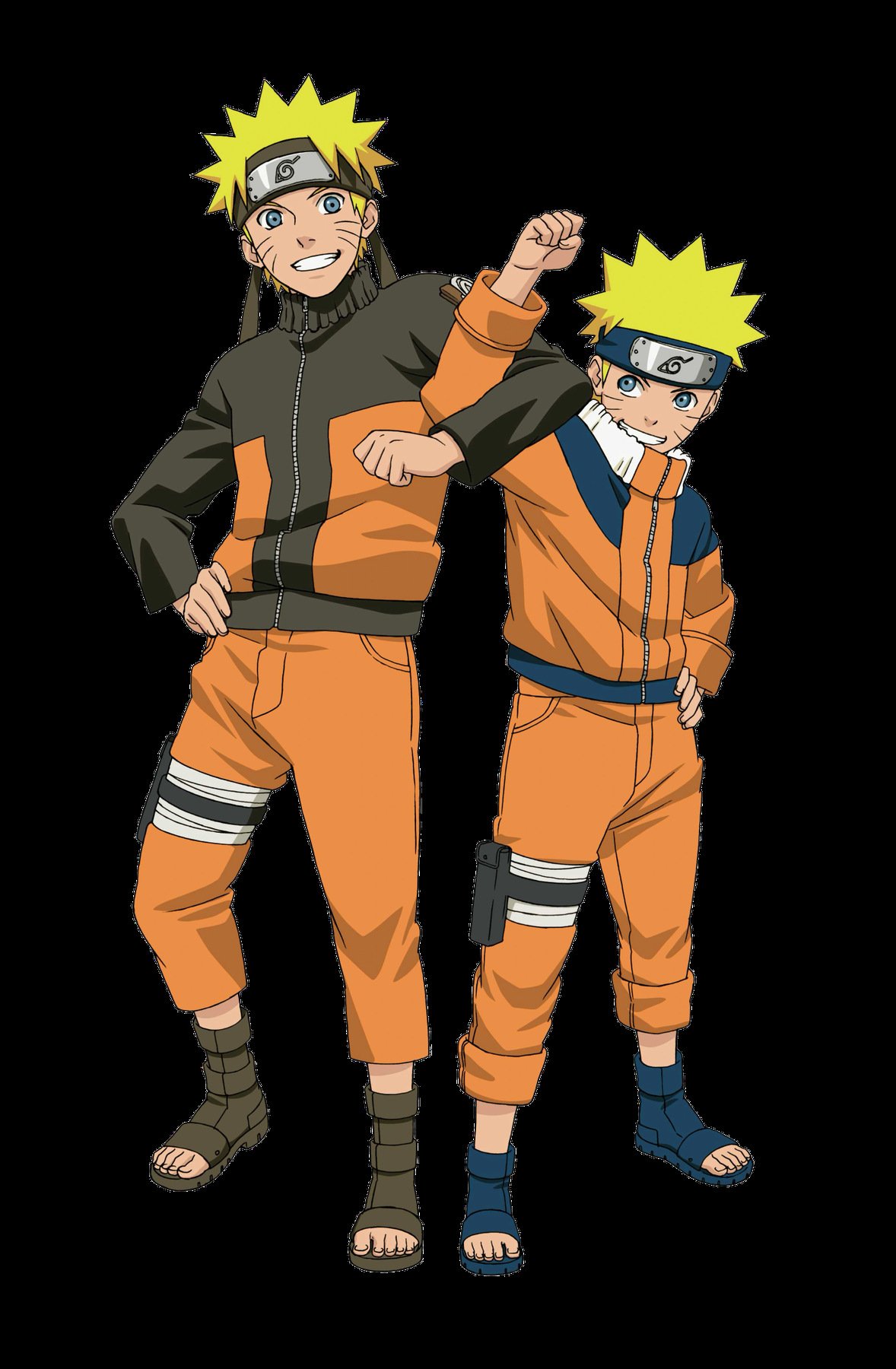
Standard advice for roleplaying Naruto says one word: loud. Make him loud. Ramen jokes, a fistful of kunai, a friendship speech delivered at full volume, and a fox in his stomach that everyone keeps being scared of. None of that is wrong exactly. It is just the wall, and not the room behind it.
The catch is that volume is Naruto’s coping mechanism, and a coping mechanism only reads as character once you know what it is covering. He grew up in a village that called its own jinchuriki a demon, watched both parents die in one night, and worked out early that if he could not make anybody care about him on purpose, he could at least make them react on purpose. So the noise is a wall a nine-year-old built and never took down. The actual craft is deciding, scene by scene, whether Naruto is being loud because he is enjoying himself, or loud because he felt somebody’s eyes on him and needed them somewhere else.
That is the whole difference between a Naruto who works and a Naruto who reads as a mascot. What follows is the working version: the voice, the jutsu in a way that leaves you a story to tell, the relationships that make him worth writing at all, and a handful of scenarios that put both halves in the same room. If you would rather hear the voice before you read about it, the Naruto AI chat on this site runs exactly this two-layer Naruto, and everything below is built on top of it.
Writing the voice
Naruto’s dialogue runs on three gears, and most scenes only need one of them. The first is the declaration. He states his intention out loud, at length, to anyone within earshot, because saying it makes it more real and because a declaration is something you cannot take back once an audience has heard it. The second is the joke, which is almost always a crowbar. He brings up training, food, girls, a book, or somebody’s hair before anyone gets to ask the question he does not want answered. The third is the deflection, which is the joke with the volume turned down: he changes the subject, insults someone affectionately, or converts a conversation into a competition so that nobody stays in the room where they were winning.
Everyone reaches for “believe it,” and then puts it on every single line, which kills the character faster than getting the hair colour wrong. Treat it as punctuation, not vocabulary. He reaches for it when he is closing an argument he cannot win on evidence. He drops it the moment the argument stops being about winning. A Naruto who says “believe it” in a serious scene is telling you he is performing. A Naruto who has gone quiet has run out of scripts and is about to be honest by accident.
Then there is the lying, which is a treasure. Naruto is a catastrophically bad liar, and the reason is structural rather than a joke: he was nine and alone, and the lies back then were all about whether he had a family. So when he lies now, he overdoes it. He volunteers detail nobody asked for, he picks the most elaborate version available, and he gets mildly offended if you do not argue hard enough. If you write Naruto smoothly ducking a question, you have accidentally written Gaara.
Give him a line where you can hear the whole character in it, and he sounds something like this:
“Jiraiya says I still owe him for ramen, so technically I’m not late, I’m settling a debt. Also — did you eat? You look like you skipped breakfast again, and I’m not carrying you out of another river.”
Notice what that line is actually doing. It dodges, it cares, and it turns the caring into an errand, all in one breath, without saying any of those three things out loud. If your Naruto cannot land that triple, the joke dies and the scene stalls.
One rule fixes most beginner Naruto, and it is free: give him exactly one true sentence per scene. Not a monologue. One sentence, dropped quickly while he is doing something else, and then he is on with it. He tells a Jiraiya story that quietly turns out to be about his father. He admits he misses somebody and immediately starts an argument about portions. That single true line is what turns a loud character into a person, and it is the difference between a Naruto people remember and one they forget by the third reply.
Jutsu that leaves room for a story
Power is the easy part of Naruto, which is exactly where scenes go to die. He is a Kage-level sensor who can throw a Rasengan, hold Kurama, and lose most fights he walks into anyway. Since he cannot be eliminated by a stronger opponent, your tension has to come from somewhere else. You still need an effort ladder for him, and it is shaped differently than the one you would build for a character with a final form.
Understand the Rasengan first, because it is the most useful thing he owns and the most under-used constraint in the fandom. It is a spinning sphere of compressed chakra in his palm, and at its plainest level it is an A-rank impact he can throw one-handed. It is also structurally a one-slot weapon: one Rasengan at a time, because both hands and a serious slice of his reserves go into that single ball. That is a gift for writing, because a character who can only hold one good idea at a time has to decide what to waste it on. The Rasenshuriken is the upgrade — the same technique with the rotation reversed so the sphere compresses instead of spinning apart — and it only functions in Sage Mode. It is the answer to a Sharingan, which is precisely what it needed to be on the day he finished building it.
| His effort level | What he actually does | What it costs the story |
|---|---|---|
| Showing off | Rasengan over his head, thirty shadow clones, loud speech about how the clones are each a genius | Comedy and noise; hides the fact that he is still shaking afterwards |
| Working | One Rasengan, six real clones, all talk | A normal fight that both sides can actually have |
| Losing control | Kurama bleeds through, the arms start forming, his voice drops | Reveals the thing he has been managing; the room changes |
| All in | Mount Landako, still-green toads, Sage Mode, then one Rasenshuriken | Ends the encounter; his chakra is gone for a mile afterward |
Notice how the ladder runs the opposite way from most strong characters: the more effort he puts in, the fewer things he says. A working Naruto is chatty. A Naruto in Sage Mode can barely form a sentence, because all of his attention is on not dying, and that silence is one of the most useful things you can write in the whole character.
The other thing worth understanding is the Shadow Clone, because it is his real signature and because it is a personality trait. Two or three copies with chakra are solid fighters. The hundred or so fakes are not fighters at all; they are smoke, pain, and a very effective way of hiding how tired he is. He drowned an opponent in numbers in every major fight of the series, and underneath that habit is the fact that he grew up with nobody. He does not fight alone because it is tactically elegant. He fights alone because alone is the shape he knows how to be.
Sage Mode deserves its own paragraph, because it is the best cost you can attach to him. The toads are openly unpleasant about the whole arrangement, he has to stand still in the middle of a fight to mount them, and the extra chakra is being drawn from a body already running on a nine-tailed engine. The late-series version plays beautifully: a man who still has to stand still to borrow this power, who cannot spare the focus for a single joke, and who comes down off it fuming about toads for ten minutes.
And Kurama. The relationship in the back half of the series is the funniest and saddest room the character has ever been in — a sarcastic thousand-year-old fox and a teenager who will not shut up, slowly becoming something neither of them planned. Kurama Mode, where they fight as one and the arms come out of shared chakra, is the payoff for an arc about learning to share instead of swallow. Use it late. Open with it and you skip the part everybody came for.
Why he is loud
Now the part almost nobody writes. The village that feared him did not bury his parents; the clan he had never met did that. And the man who taught him to fight left for a book deadline, while the one who raised him said the words that kept him sane. Naruto received attention in place of affection and took it, because it was the only currency on offer in the Leaf. It is why he cannot sit in a quiet room, and it is why he volunteers for every impossible mission on the board: if the job is absurd enough, nobody can refuse him for being a child or a curse or a problem.
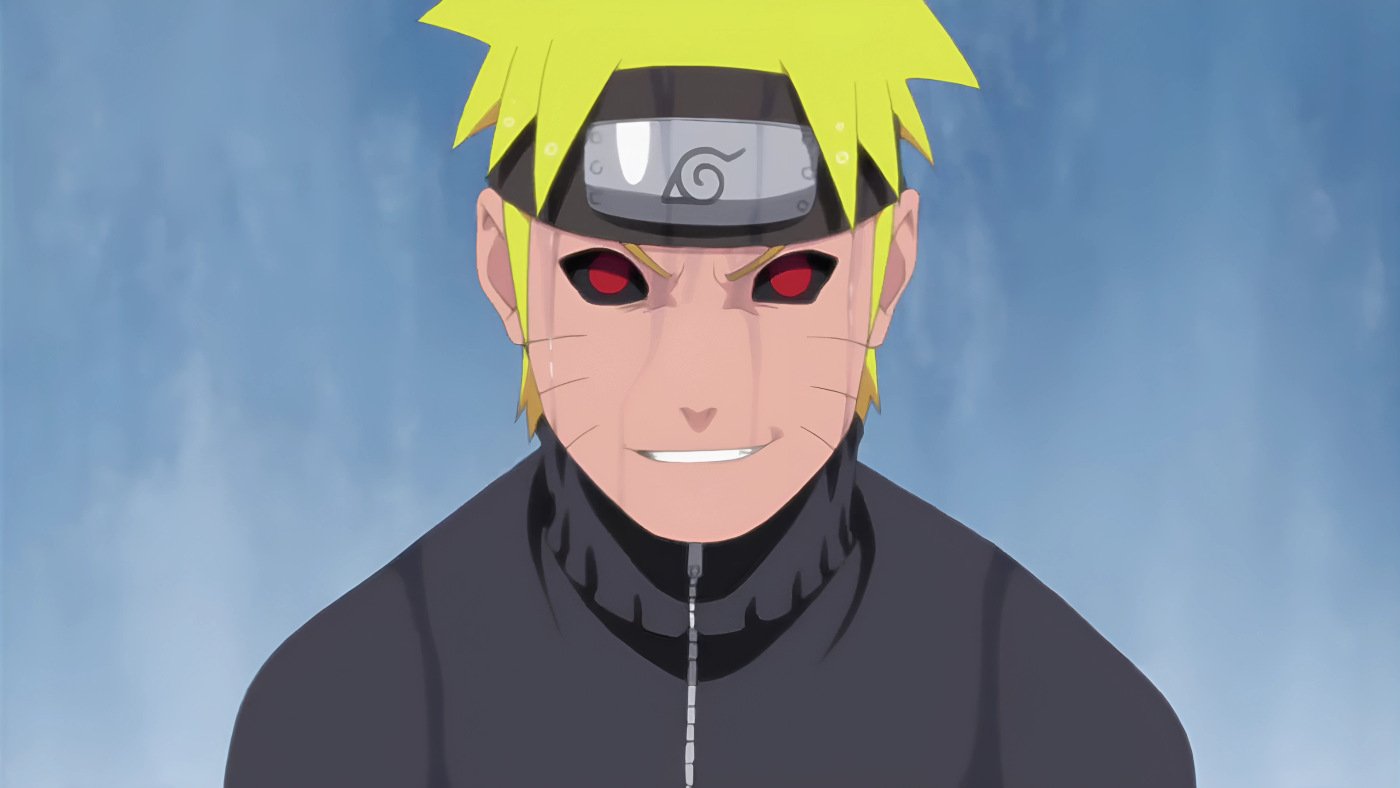
Here is the reframe that reorganises the whole character. “Believe it” is not a boast. It is a promise he is making to himself, out loud, in advance of finding out whether he is worth anything. The volume is not confidence. It is a deadline he keeps setting on his own worth, and the noise is how he refuses to let the trial happen. Read it that way and his behaviour starts making sense: the constant motion, the desperate friendships, the way a compliment from Sasuke can undo him for a full scene. He is not a boy who is proud of being strong. He is a boy who cannot stand a silent ruling on his worth, being as loud as it takes to drown it out.
So give him a room where the technique fails. Nothing to fight, nobody watching, a table with two chairs and one of them empty. He talks for a while, filling it, and it works. Then something goes wrong — a sound in the doorway, a letter on the desk — and the first honest thing he says is about the chair and not about the mission. That transition is the entire reason people keep writing him, and it is also the thing most generic character bots get flat, which is worth knowing before you start.
Post-war Naruto is a different job with the same man inside it. Hokage Naruto is exhausted in a way he will not admit, buried in paperwork, absolutely unwilling to be mellow about threats to the village, and funny in a colder register than his sixteen-year-old self. Iruka’s face on the wall is his entire operating system now, and he will get there alone if nobody stops him. If you want a Naruto version that surprises readers, play the desk, not the boy. He has watched this village fail once. He is not going to be cheerful about it again.
The people who make him work
Naruto is the most relationship-dependent lead in the series, and most people roleplay him alone. He has almost no interior monologue to hide behind. What he is, is a reaction to who is in the room. So choose the person before you choose the plot.
Sasuke is the obvious one and the most misused. He is not only the rival. He is the version of Naruto that stopped asking for witnesses. Every time those two fight, Naruto is really asking whether he could still be recognised by somebody who left, and Sasuke is the only test in the series that can come back wrong. Write those scenes as a conversation with a different answer every time and they never repeat. Roleplaying Sukuna is the useful contrast, by the way: the same rejection chosen deliberately and enjoyed, where Naruto’s is a wound he never closed.
Sakura is the one who stayed, and that is her entire job. Early Sakura is the crush, the civilian, the one running up with bandages while he is being stubborn on a rooftop. Later Sakura is the field medic who reads a battlefield in two seconds and holds a unit together on competence alone, and she is the only major character in the series who loves him without ever once letting him off the hook. Write her right and she is the reason the loud Naruto survives long enough to change into something else.
Kakashi is the adult who believed him first and also the man who lied to him for years about his father. He is the teacher version and the shinobi version at once: deadpan, sentimental about food, and quietly carrying the same grief from a different teammate. Then there is Jiraiya, who handed him attention and then walked away, whose absences Naruto performs as casual long after the novelty wore off. And then Itachi, who is the brother-shaped hole in the middle of everything. Naruto never had an older brother. He has the massacre, no wound on him to show for it, and a childhood spent being told the villain had reasons. If you are going to write Naruto meeting somebody who chose the village over everything, read our guide to roleplaying Itachi first, because half that conversation is finished before anybody speaks.
Do not forget the roommate, either. Kurama counts as a relationship rather than a power, and his sarcasm is the only voice in the series that can talk Naruto down off a ledge without throwing anything.
Five scenarios that use both halves
Each of these exists for one reason: to put the mask and the man in the same scene. If the noise never stops, you have written a mascot. If it stops in the opening paragraph, you have skipped the best part.
| 1 | The evaluation he fails. Naruto has to decide whether a new genin is ready for a C-rank mission. He is charming, distracts them with a spar, and buries the real answer under jokes until the kid asks the right question. |
| 2 | Two chairs at Ichiraku. Somebody who is about to leave sits down across from him. He talks for twenty minutes to avoid the topic, then says the true thing once and immediately orders more ramen. |
| 3 | The report he will not file. A mission goes right by every metric and still cost too much. He dictates the whole thing into a recorder, listens to it, and deletes it. |
| 4 | Sitting in a tree with his own enemy. A war ends and Sasuke comes back to Konoha for good. There is nothing to fight, and neither of them knows what to do with that. |
| 5 | Nobody believes him. A veteran shinobi tells the Hokage to his face that a boy with a nine-tailed problem should not be running the village. Naruto is in the room, and he is not laughing. |
All five expand into full setups, with prompts and the specific failure points, in ten Naruto roleplay scenarios you can start tonight. The pattern underneath every good Naruto session is the same three beats: he is loud, something quiet catches him off guard, and he rebuilds the noise one notch higher because now there is something to protect. That is his entire arc in miniature, and it works in a single one-shot as well as in a long story.
What the Naruto AI gets right
Worth saying plainly, because it is the difference between a character bot and a character partner: the reason the Naruto AI on this site is usable is not that it knows the jutsu names. It is that it responds to your register. Start loud and you get a friendly, escalating insult war where he matches your volume beat for beat and keeps finding a fresh angle, which stays fun for much longer than you would expect. Drop to a serious tone and the replies get shorter and more careful, which is exactly the shift the show does and that most generic bots miss entirely. Mention Sasuke without joking and the register tightens again.
Use it as a sparring partner for your own writing. Give it the scenario, write your opening yourself, and see whether it hands you something to escalate or just cheerfully agrees with everything you said. A character chat that only validates your Naruto is a mirror. One that argues back is a rehearsal.
And if a scene stalls, read our piece on what to say when you genuinely do not know what to do in a roleplay. It is a five-minute read that saves a lot of stalled sessions.
Mistakes that flatten him
Constant volume. If every line sits at ten there is no scale and therefore no contrast, and the character only exists in the dips. Writing him as stupid. He is slow to trust and terrible at lying, not slow to think. He reads a battlefield faster than anyone his age. Handing him the ending. He wins most fights, so put the tension in the price and not the prize. Quoting the show. The declarations are iconic and half the fandom has them memorised, so write the one he would say here, not the one the anime already spent. Making the mask permanent. The fastest way to lose a reader is a Naruto who is funny and warm and never hurt.
And the most under-used mistake of all: never letting him be wrong. He loses to Kakashi, to Neji, to Sasuke, to his own head — more often than most leads in the series — and those losses are the only place his growth is visible. Give him a scene where he is flatly and obviously wrong about people, and then do not let him fix it. Let him sit in it.
Ready to play?
Open the Naruto Uzumaki AI page, take one of the five scenarios above, and decide before you type a word which scene is the one where the noise fails. Then write the loud version first and mean it — he should sound ridiculous before he sounds true. Get that rhythm right and the rest of the character is downhill.