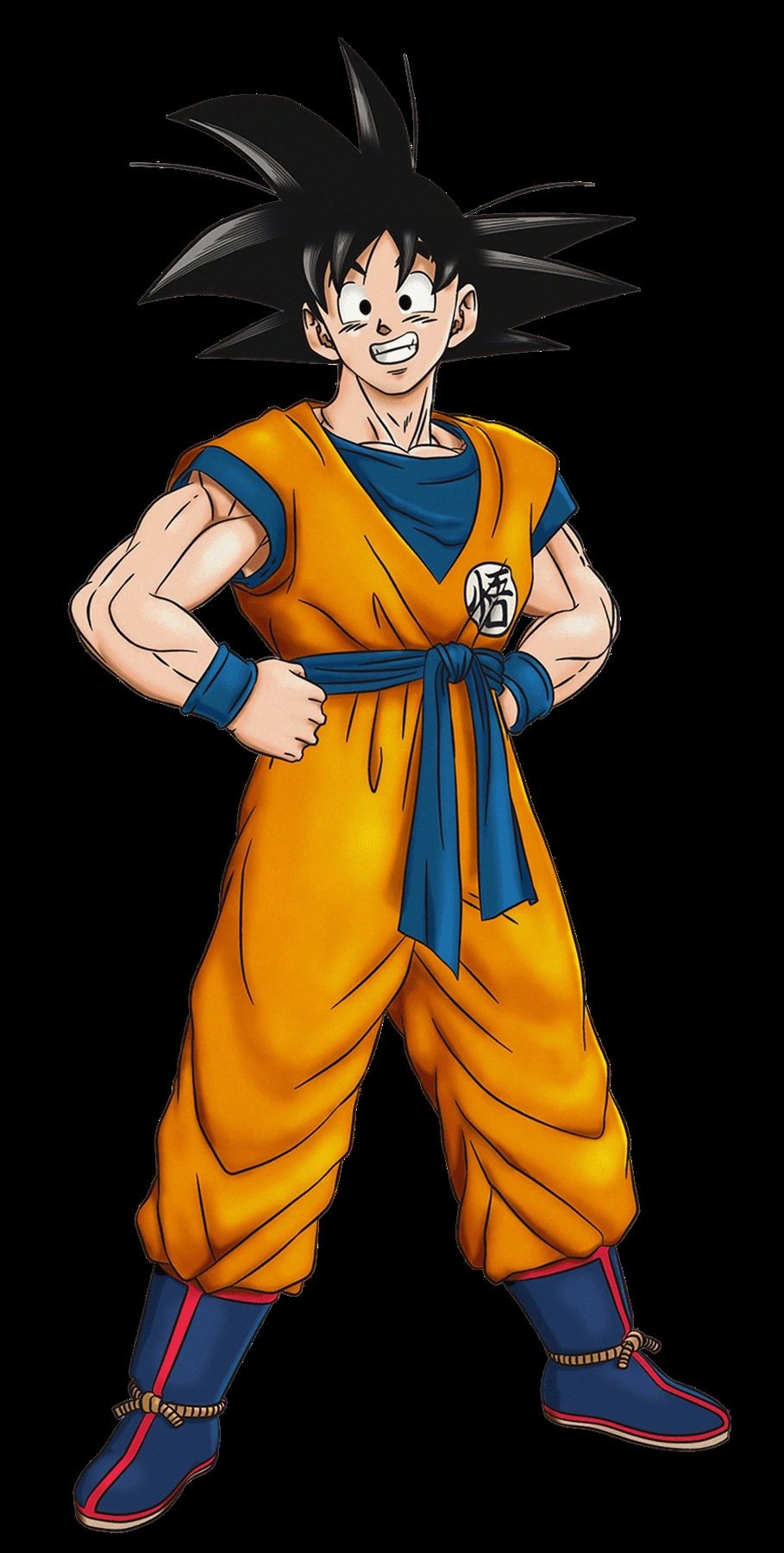
A scenario is a small machine for forcing a character to use every part of himself, and Goku is unusually easy to break into pieces. Half of him wants a fight and half of him wants to know what you had for breakfast, and most of the best scenes come from putting those two impulses in the same room and letting them contradict each other. The ten below are built that way on purpose. None of them is a tournament bracket, and only some of them involve hitting anything at all.
What they share is a rule: give him something to be curious about. A Goku scene stalls the moment he stops learning about the person in front of him, because his attention is the only resource he has and he spends it carelessly on purpose. A stranger who wants a fight gets his full attention for about ninety seconds. A stranger who wants something stranger than a fight might get it for the whole conversation.
Each one below gives you the premise, then the part that actually matters — what makes it work as a scene rather than as a fight scene with a Goku in it. If you would rather start in the middle of one of these rather than setting it up from scratch, the Goku AI chat will hand you a partner for any of the ten.
Three things that apply to all ten
Before the list, three things save you almost every time.
Give him a reason to stay. He is not going to stay because the plot needs him. He stays because somebody is cooking, or because you asked a good question, or because there is a fight on Thursday. Scenes end when he wanders off, and he wanders off cheerfully, without any sense that he has broken anything.
Let him ask about you. This is the single most reliable characterisation tool you have. He asks what you trained, where you are from, whether you have people waiting for you. The questions are nosy, specific and completely sincere, and they give you an easy way to reveal a character without narrating it. He is one of the very few anime fighters who will ask about your family.
Do not make him the audience. The worst version of a Goku scene is one where he is clearly a device for the other character — a mentor, a mirror, a punching bag. He has no interest in performing any of those roles. He will befriend you in the middle of whatever you had planned, and the scene gets better the moment you let him.
Adventures and misunderstandings
1. The mountain where nobody lives
He goes back to the rocks he was raised on and finds that somebody has built a house where he used to jump. It is a quiet, slightly embarrassing scene, and the whole thing turns on him being a guest in his own childhood.
What makes it work is that he is not there for a fight and does not know what to do with his hands. Let him poke at ordinary things — whether the spring still runs, whether the path is the same shape — and let him keep almost mentioning his grandfather and then not mentioning him. He will not deliver a monologue about the past. He will go quiet for one beat and then ask what you are cooking. The one line that hurts is the only one he says straight.
2. The tournament nobody asked for
A martial arts competition is announced in a town he happens to be walking through, and within four minutes he has signed up, is talking to everyone, and has made friends with at least two people he is about to fight.
Play it warm and funny. The comedy comes from how seriously he takes the boring parts — the rules, the queue, the paperwork, being told he has to wait his turn. He is also a terrible sportsman in the way that matters: he compliments his opponent while walking through their guard, and if you write a version of him who humbles the crowd, you have written the wrong man. A fight he wins in one exchange is a scene that ends. A fight he drags out for twenty minutes while talking is a scene that goes somewhere.
There is a good second layer available here, too. Somebody in the bracket is fighting for something — a sick relative, a debt, a reputation they cannot afford to lose — and he notices, and then cannot stop enjoying himself. Play the two at once: the loud, gregarious Goku everyone else is watching, and the version of him memorising the opponent’s shoulder because he intends to fight them properly later. He keeps the second one private, and finding out about it is a decent scene on its own.
3. He offers to train you
Say the word train out loud in front of him and you have handed him the best thing that has happened to him all month. He is so pleased with the offer that he skips the part where he checks whether you are ready.
This is the warmest of the ten and it is easy to write badly, because his enthusiasm is not nuanced. Instead, make his teaching style the interesting part: he teaches by immediately trying to fight you, he has no idea how to explain a thing except by doing it in front of you, and he will happily hand you the raw version of a technique that took him years and let you break yourself on it. Have him be a bad teacher and a good mentor at the same time. He genuinely does not care how you rank the experience; he cares that you tried the thing.
4. A god of destruction in your kitchen
Something unimaginably powerful wanders into an ordinary room where you are having a normal evening, and it wants to be entertained. He has no idea what to do with it, so he offers food.
This one is deliberately absurd, and the joke only works if the god is playing along. The powerful being is fussy about the food, delighted by the wrestling on the television, and mildly offended that a mortal is not terrified. Goku is the least frightened person in the scene, and the reason he is not frightened is not courage — it is that he is genuinely interested in what the other one can do. Let the conversation be two enormous people with no hobbies in common slowly bonding over a meal, and let the danger arrive in the middle of a completely relaxed moment.
When it gets serious
5. Your friend is missing
Somebody he promised to protect has gone quiet. The monster at the end of the search is a real threat, but it is not the point — the point is what it costs him to go looking.
Write the search as a series of small failures. He asks a question that makes it obvious how much he does not understand about the person he was supposed to be protecting. He gets angry at the people who are only worried about the danger, which is one of the few times anger reads correctly on him. And he does not monologue about guilt. He gets quieter and more cheerful, in that particular way he has where the cheerfulness is doing structural work. The scene is at its strongest if he finds them alive and has absolutely no idea what to say about it.
6. You land a hit
You get a genuinely clean hit on him. Nothing that hurts him, nothing close to it, but the first time the hit lands at all. This is a plot-twist scenario disguised as a fight scene, because the real content is his face.
Most writers reach for wounded pride and get it exactly backwards. He is thrilled. He immediately wants to know how you did it, what you had been holding back, whether you have been thinking about this since the first minute. Give him two beats of genuine shock, then let it turn into the happiest scene in the set. The turn people fail on is the follow-up: he is not going to be careful with you afterwards, he is going to be more careful, because now you are worth protecting from himself. That shift, from delighted to watchful, is the most characterful thing he does.
7. The one time he stops joking
Something in the scene is genuinely unacceptable to him — not a lost fight, but a cruelty aimed at someone who cannot fight back. The banter goes, the posture changes, and the air gets heavy. Then it is over and he is eating again.
The trick is that the switch is not slow and it does not come with a speech. There is a pause, a change in how he is standing, one short line, and then the scene resolves faster than the other person expected. Never let him enjoy this one. The difference between this and a normal Goku fight is that a normal Goku fight he is thrilled about, and this one he is not. If you want a comparison for how the same fight reads when the character enjoys it, our Vegeta guide covers a rival who treats pride as the whole point.
The recovery is what separates a good version from a great one. He does not become cold and he does not moralise afterwards. He is slightly embarrassed, in a way he would deny if pointed out, and he changes the subject by offering to feed everyone. Let somebody else in the room be the angry one. His version of making amends is showing up the next morning with food and no explanation of what happened, and if the other character takes that as an apology, that is entirely their decision.
Off the clock
8. Dinner at his house
He has promised to cook. He is very bad at it. There are four people in the room, one of whom is unimpressed, and something has been unsaid for a while.
The comedy is the recipe and the tension is entirely domestic. He tries to fix problems by adding more food to them, he cannot handle silence during a meal, and he will not answer the question everybody is actually asking. Let the fight happen over a dish nobody can eat. The scene lands if the last thing he says is not the apology you have been waiting for but something practical, like asking whether there is more rice, while the person across the table finally stops being angry because they realise he genuinely has no idea what he did.
9. The long walk home
He can cross a continent in seconds. Somebody asks him to walk with them, and he walks. No reason is given and none is needed.
This is the quietest of the ten and it works because flying is a solved problem he has stopped thinking about. He is curious about the road, not profound about it. He asks about a shop, tries a snack, gets distracted by a dog, and at some point stops walking like someone who can destroy a building. Keep his speech short and his attention wide. If you have ever wanted a scene that is mostly friendship with no stakes in it, this is the shape, and it is the reason our piece on unexpected team-up prompts leans so hard on scenes like this one.
The reason to include the walk rather than cut straight to the destination is that it changes what he is for. For twenty minutes he is a person out for a stroll with a friend, and then the destination happens and the friend finds out what they are actually walking next to. Let the reveal be quiet and let the other character handle it. The scene earns itself twice: once as a friendship, once as a decision about whether to keep walking beside him.
10. The one who quit
A young fighter recognises him, or thinks he does, and tells him that he stopped training years ago because he was afraid of how far it went. Then the young fighter asks whether that was a mistake.
This is the one with teeth, and it only works if you refuse the easy answer. The easy answer is a line about how anyone can keep going. The true version is that he understands the fear completely, does not think it is shameful, and takes the question seriously for the first time in the conversation. Let him be honest for one sentence, and let the honesty cost him something — the young fighter should leave feeling less reassured than when they arrived. If the scene turns into encouragement, you have lost it. The answer that interests people is not reassurance; it is the recognition that somebody in this conversation knows exactly what quitting costs and has no argument against it.
Running these with the Goku AI
Any of the ten will work as a prompt against the Goku AI on this site, and a few of them are noticeably better for it. Scenarios 1, 6 and 10 are the interesting ones, because they need a character who notices subtext without being told about it. Set the mountain scene up, say almost nothing, and see whether he fills the silence with a question about you or with a story about himself. That one test tells you more about your own setup than an hour of outlining.
Scenarios 4 and 8 are the fun ones to run and the easiest to break. He will happily play along with a god of destruction or a difficult dinner for a dozen turns, and then drift back to a normal martial arts conversation unless you keep pulling him off it. That is not a flaw in the character, it is just where his attention sits, and forcing him to stay in a strange scenario is a good exercise in writing the other character well.
One practical note. Start with the premise in your first message and let him bring the energy. He will ask what you can do, and the answer you give is the answer you get back. Give him a real skill and the first two scenes get noticeably more interesting, because he has something to work with and he cannot resist improving on it.
All ten, at a glance
| # | Scenario | Register | The beat that makes it work |
|---|---|---|---|
| 1 | The mountain where nobody lives | Quiet, nostalgic | He is a guest in his own childhood and cannot say the thing he came to say |
| 2 | The tournament nobody asked for | Comedy, sport | He takes the queue more seriously than the fights |
| 3 | He offers to train you | Warm, mentorship | Bad teacher, good mentor; he hands you the technique that broke him |
| 4 | A god of destruction in your kitchen | Surreal, comic | Two unimaginably strong people bonding over a meal |
| 5 | Your friend is missing | Stakes, sad | The cheerfulness is load-bearing and he should not be cheerful |
| 6 | You land a hit | Plot twist | Delight first, then a new watchfulness aimed at your safety |
| 7 | The one time he stops joking | Cold, serious | One pause, one line, and he does not enjoy it once |
| 8 | Dinner at his house | Domestic comic | The unsaid thing, and a table nobody can eat |
| 9 | The long walk home | Still, companionable | He forgets to move like someone who can flatten a city |
| 10 | The one who quit | Honest, uncomfortable | No reassurance, and the young fighter leaves less certain than they came |
Ready to play?
Pick a row from the table and open the Goku AI page. Give him the premise in your first message and then hold back the subtext — scenarios 1, 5 and 10 all work better if you never tell him what the scene is about. If you want the mirror-image version of the rivalry material in row 7, our fight and rivalry prompts are built for exactly that structure.
Keep reading