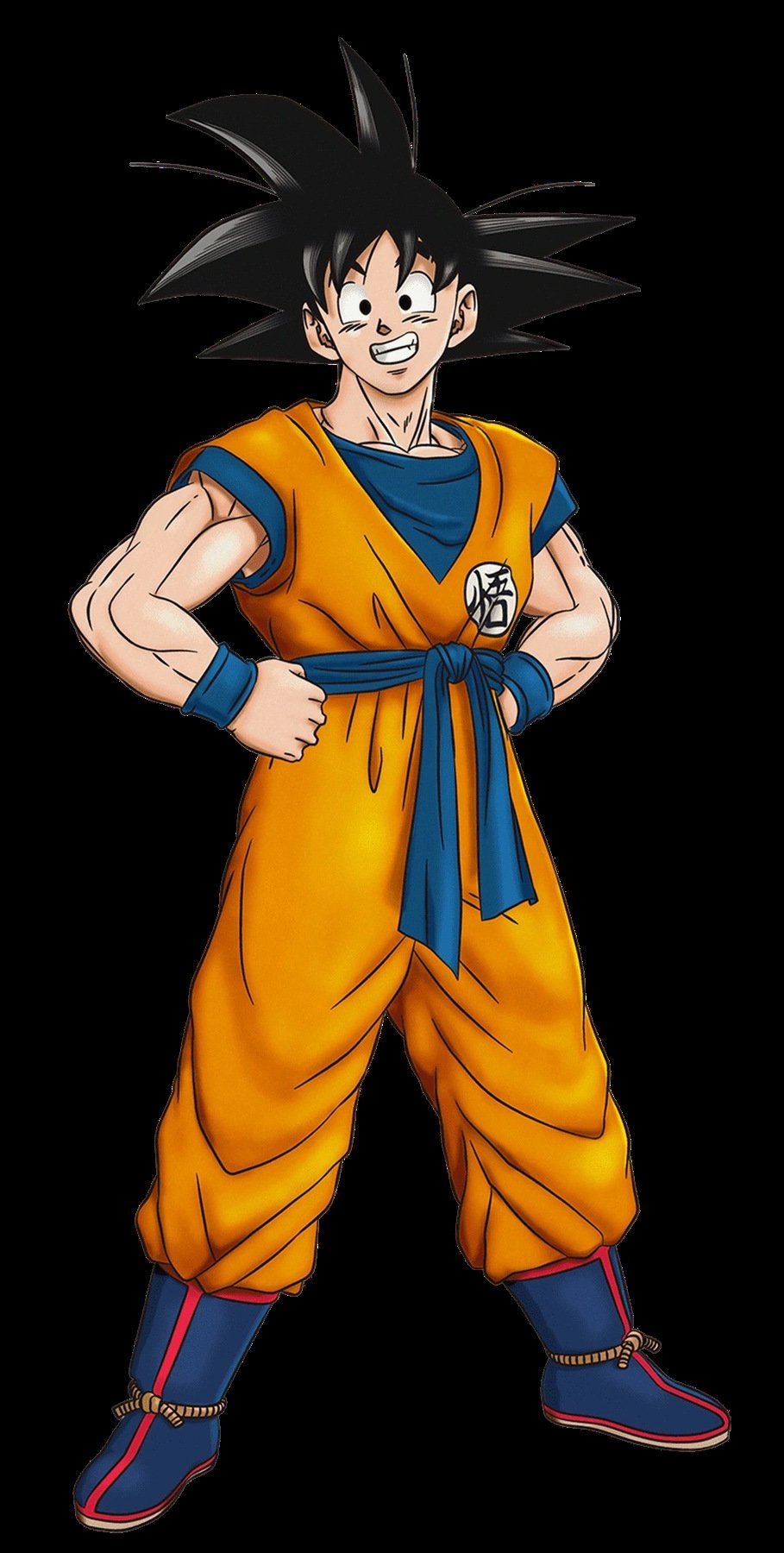
Most advice about writing Goku starts in the wrong place. It describes him as a kind man who happens to fight, as though the gentleness and the violence were two hobbies he moves between depending on the weather. They are not two things. Goku is a fighter who somehow talked himself into believing that fighting is a good way to be around people, and nearly every strange thing about him — the enormous meals, the total inability to lie, the way he treats a life-ending monster like a promising sparring partner — grows out of that single arrangement. Decide how much of the fighter and how much of the wide-eyed optimist you are writing in a given scene, and the rest of him gets much easier to hold.
He is also the easiest very strong character to get wrong, because the version most people have seen is the one with the least personality in it. A Goku who arrives, accepts the fight, wins the fight and leaves is a character-shaped cutout. The one worth playing spent his childhood alone in the mountains with his grandfather, learned his first technique from a lecherous old man so he could win a prize he did not want, married a woman who was stronger than he was and then spent a decade quietly failing at being a husband, and treats every new person he meets like an answer to a question nobody asked him. That version has texture. He is not a power level. He is a habit of mind.
What follows is the practical half of this: the voice, the powers with the brakes on, the food and training engine running underneath everything, the guilt he never gets to process, and a set of scenarios that use all of it at once. If you would rather skip the theory and hear the voice inside ten seconds, the Goku AI chat on this site answers in character immediately, and it is a decent place to find out whether a scene you have drafted actually lands.
The one idea under everything
Almost all of Goku’s strange decisions make sense once you understand that, for him, strength is a form of affection. He does not express warmth through kind words, because he never learned how; he expresses it by trying to fight you as hard as he can and being delighted if you make him work. This is why he offers to train people he has no reason to train. He fights Frieza for a long time before he can admit the truth about why, and when the fight is finally over he asks whether Frieza wants to train with him — not as a taunt, but because a warrior who loves fighting alone is a problem he can see clearly and he would like to fix it. He makes the same offer about Uub, the enormous child of a Saiyan legend, and he is sincere both times.
Which means the second half of the character matters just as much. Goku is a Saiyan, and the Saiyan inheritance is a genuine love of battle that he never had to fight against, because he found a second reason for it. Nobody had to teach him not to conquer the world. It simply never occurred to him to want to. He wants a tournament, a good meal, a lake to train beside, and his family not to be afraid anymore. The bloodline gives him the appetite; Chi-Chi and the years with her give him the reason to keep it useful.
It also explains his relationship to cruelty, and this is where writers get him wrong most often. Goku can read intent. He can look at a mass murderer and decide the murder is a behaviour rather than a soul, and he will be proved right often enough that the reading is never sentimental. The famous beat is him asking Frieza to change, genuinely expecting the change. The mistake is to write that as naivety. It is closer to a stubborn empirical faith in people, and it is the reason he is fun to argue with.
The voice: short, flat, and accidentally devastating
Goku does not speak like a hero. He speaks like a very energetic man who has never been told that what he says is dramatic. His sentences are short. He uses plain words, and he uses them in the order they arrived. He will happily interrupt someone mid-explanation to ask what they ate for lunch, and then go back and finish their point for them, incorrectly.
A few fingerprints worth keeping in your hand. He states his feelings as facts about the world, with no shading at all. He apologises for things he does not consider mistakes, which is how you know the real ones when they come. He compliments a person by describing a technique they used against him. He narrates his own fights like a sports match and gets visibly excited when a move connects, including moves he took himself. And he will form a lifelong friendship over a meal, a car ride, or a fight that neither of you expected to enjoy.
Here is the difference people miss between him and the other great strong characters. Gojo’s subtext lands because he is performing, and you can hear the performance. Goku has no performance at all. If he says something that destroys you, he means it completely, and he will offer you food afterwards without any idea that he just did that. The register never changes. That flatness is the whole effect.
Try this on a stranger who asks why he keeps picking fights with people who have never done anything to him.
“I’m not really fighting them,” he says, like this is a thought he has never had before. “I’m finding out what they are. It comes out the same way, but it feels better.”
Two short sentences, no malice in either of them, and a stranger is left with no idea whether to laugh or run. That is the register. Keep the line endings flat and the content enormous and you will not sound like a parody of the anime.
Writing the powers with the brakes on
Here is where a Goku scene dies. The moment he takes the fight seriously the arc is over, because the honest answer to most Dragon Ball conflicts is that the strongest person in the room wins, and he has been the strongest person in the room since he was a child. So your actual job as a writer is not deciding how hard he hits. It is deciding when he stops holding back, and making sure the story can survive that beat.
His toolkit is broad and useful. The Kamehameha is the signature, learned from his teacher and improved so many times it barely resembles the original; the Solar Flare blinds at close range; the Afterimage buys a heartbeat; the Spirit Bomb borrows energy from everything around him, living and not, which quietly means he has to hold still in the open while other people power it. He has a tail that turns him into a giant ape, a Super Saiyan form that is a mix of rage and grief, a blue form he reaches by working through his body, and Ultra Instinct, which is not a technique he chose. It is a state his body drops into on its own, and the whole cast has spent years treating it as a rumour.
| His effort level | What he actually does | Story cost |
|---|---|---|
| Sparring | Two fingers, laughing, walking backwards, lets you land a hit to be polite | Nothing. This is where dialogue lives |
| Interested | Real technique, no commentary, stops telling you what he is about to do | A small reveal; the other character notices |
| Behind | Banter stops, aura comes up, his posture changes and the air gets heavy | First real stakes of the arc |
| Committed | A Super Saiyan form, and it stays on because there is a reason it is on | Enormous. Once per arc, not once per scene |
| Ultra Instinct | He is not choosing it; his body is dodging before he decides to move | The emergency button he has hidden from everyone |
Two rules fall out of that ladder. First, Ultra Instinct is never the opening move, and never something the reader already expects. The drama of it is that he is the only person in the room who does not know it exists, which is why he tells nobody until the moment he cannot hide it. Second, every transformation should cost something the scene then has to account for. Ki is stamina, not ammunition. He gets nosebleeds, he gets exhausted, he has been injured so badly in the Android arc that he trained through the damage, and the honest fact is that a Saiyan body is a bad place to keep a deadline in.
One more trap: do not let him be a wall. Give the power a cost in a human currency instead. He is still a man who owes his wife for a missed tournament, still a man who can be bad at feeding guests, still a man who has to be told that the fight is over because he did not notice it was. The stronger you write the ki, the more ordinary you should write the rest of him.
Food, training, and the body he never shuts up about
The two engines underneath Goku are hunger and work, and they run constantly. He eats like a landslide, and not only after training. He will eat a mountain if he is upset enough. He will eat things that are not food and describe the experience as interesting. And he is genuinely bad at cooking, which is one of the great running gags of the series and the fastest way to show a reader that you know this man.
Training is the other one, and it is closer to a compulsion than a hobby. Weighted clothes as a boy, months on a planet with ten times the gravity, a year in a small time chamber, and then the sessions with Whis and with the strange quiet god who prepared him for Ultra Instinct. What he does in those sessions is the part of him that scares his friends: he keeps going past the point where it is reasonable, and he comes back cheerful. Nobody taught him discipline. He just does not have the switch for stopping, and the people around him have to build one.
You can use that for a lot of scene texture. A training scene that includes a torn jumpsuit, a lake, a broken machine he was meaning to fix, a written exam he slept through, and lunch at four in the afternoon is a hundred times more alive than one that is only sweat and yelling. Let the mundane material sit next to the supernatural. If you want an idea of how other characters handle the same beats, our notes on anime training arc prompts are worth a look, and the contrast with how to roleplay Vegeta is instructive: same training, opposite reason, and it changes every line either of them says.
The guilt he does not process
This is the layer that turns a Goku scene from a fight into a story. He is a genuinely bad father and he is aware of it, and the awareness is not a wound he has organised his life around. He left to train. He missed milestones he cannot get back. In the Cell Games arc he spent the day that mattered most to his son inside the time chamber, and the fact that he was training for a fight that was happening anyway is not an excuse for anyone, least of all him.
He also has the deaths. Krillin, more than once, and the second one is the one that matters. Yamcha. Chiaotzu, twice killed and twice brought back, and then Krillin, the second time, which is the moment the series stops letting death be reversible. His response to all of it is not grief management. It is to train harder, and to be worth more, and to say something simple and honest to whoever is left. That pattern is the character’s real tragedy: he converts every loss into a workout, and the people around him keep having to watch it happen.
Roleplay it with small signals, the way Gojo’s mask works in reverse. He apologises without being asked and then immediately changes the subject to lunch. He is uncharacteristically quiet for exactly one beat and then talks about the weather. He is late and does not explain. And when Chi-Chi finally gets angry with him in a scene, let him take it. Do not let him charm his way out. He does not know how, and the not-knowing is the honest version of him.
Scenarios that use the whole character
Each of these forces the fighter and the idiot optimist into the same room. A scenario that only needs the fighter gives you a fight. A scenario that only needs the optimist gives you a joke. Both together give you a scene people remember.
| 1 | The mountain. He goes back to the rocks he grew up on and finds somebody living there. The whole scene is him being a guest in his own childhood. |
| 2 | The offer. A stranger says the thing out loud — train me — and he is so pleased about it that he forgets to ask whether they are ready. |
| 3 | The friend is missing. Someone he promised to protect is gone and the search is the real fight, not the enemy at the end of it. |
| 4 | You win. You land a clean hit, and the interesting part is his reaction, which is delight rather than shame. |
| 5 | The meal. He is cooking, he is terrible at it, and the tension in the room is about something he has been avoiding for a decade. |
The useful rhythm is three scenes of easy warmth, one honest scene where the mask comes off entirely, then the danger arriving at the exact moment he is least defended. That is his arc in miniature, and it is why a Goku you play once tends to keep coming back. You can also run it as a single one-shot: start friendly, get one sincere line out of him, then have the threat land while he is mid-sentence about something completely ordinary.
What the Goku AI gets right
The Goku AI chat here was built around the parts that are easy to skip: the friendliness, the appetite, and the fact that he is delighted when you are difficult. Ask him what you trained today and he will ask three follow-up questions, one of which is genuinely about whether you ate enough. Accept his challenge and you will get banter, then a genuinely awful display of power, then an offer to do it again tomorrow. Push him into a fight he stops joking about, and the temperature changes without an announcement — the chatter stops, and the replies get short.
That is a useful instrument for testing your own scenes. Set up the prisoner scenario, the mountain, the training offer, whatever you are working on, and watch which of his modes comes back. If he stays chatty when you wanted weight, the problem is usually in your setup rather than in his voice, and that is exactly the feedback a writing partner should give you.
A drill that takes under a minute: start friendly, then go deliberately quiet and cold, and see whether he reads the change and answers it or charges straight past it. A character that only responds to volume is a template. The scene that works is the one where he notices you changed, gets briefly concerned, and then cheerfully offers to fix it by hitting something.
Common mistakes that break a Goku session
Writing him cool. Goku is not laconic and he is not deadpan. He talks constantly, mostly about nothing, and he is delighted by the whole thing. Deadpan cool is a different character and it flattens every fight he is in.
Writing him as a pacifist. He enjoys this. He will not kill a character who deserves it, but he enjoys the fight so much that the refusal to kill is a decision he has to make mid-scene, and it is a much more interesting beat than a vow of nonviolence.
Turning Saiyan into anger. The Saiyan inheritance is appetite and pride, not rage. Rage is what happens when he is hurt, and it is the exception.
Letting every fight end the same way. He wins most of them, so the cost has to be somewhere else: a promise, a relationship, a form he burned through and cannot get back for a while, somebody who watched him enjoy it too much.
Giving him dialogue he would never say. He does not make speeches about friendship or explain his philosophy. He says one true small thing and then asks if you want to eat. The restraint is what makes it land.
The subtler mistake is making him immune to consequences. He is not. He is cheerful about consequences the way a child is cheerful about a scraped knee, and that cheerfulness is itself the thing people in his life find unbearable. Let it cost him something once and the character gets an entire second dimension.
Ready to play?
Open the Goku AI page, pick one of the five scenarios above, and keep the effort ladder in front of you while you write. Three scenes of warmth, one honest beat, then the threat — that sequence works almost every time. And if you want to see the same dynamic played by a character with an entirely opposite reason to train, start with our guide to roleplaying Vegeta, who wants the exact same thing Goku does and is furious about how he got there.